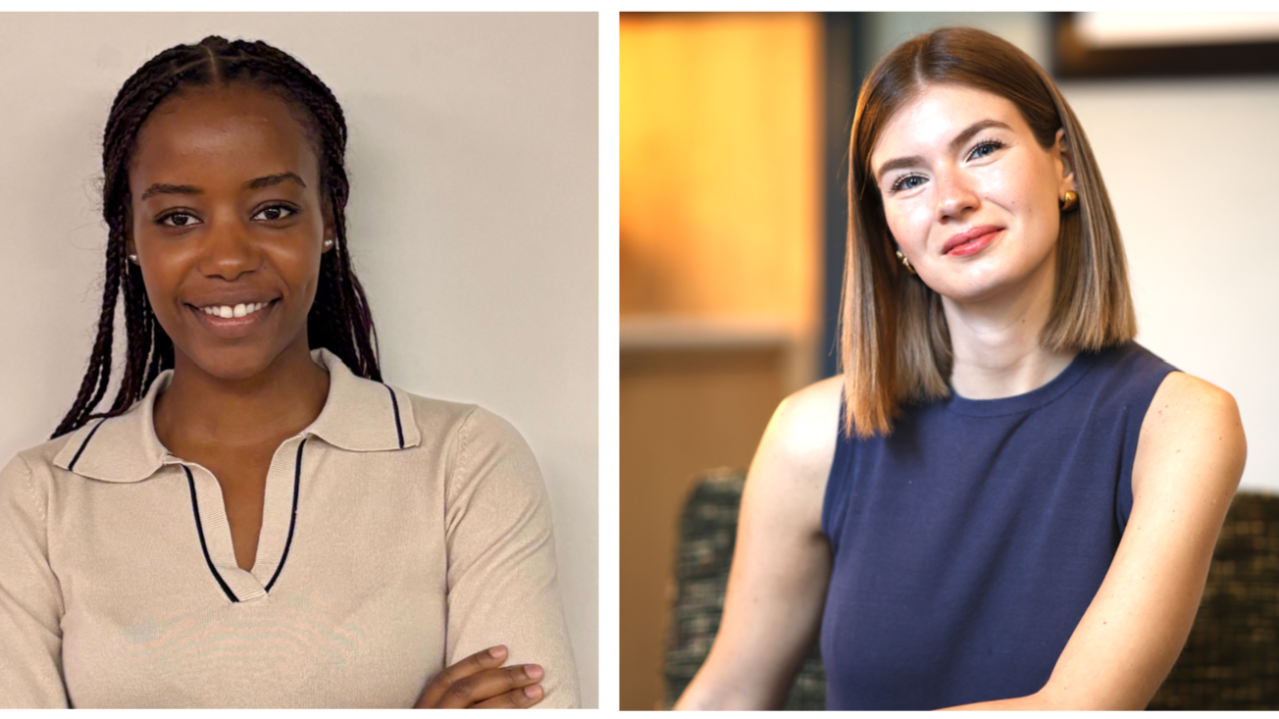


At Copilot Capital , we treat culture as core infrastructure – the stuff that keeps a tight-knit team aligned, motivated and high-performing. We try to run our business the way the best software companies do: with clear ownership, open communication, and an environment where people can genuinely grow and take the lead.
In this second part of our conversation with Rebecca Visciola and Farhana Atteib , we look at how culture shapes performance, judgment, and the way investors develop inside a small, ambitious team.
How does the investment Copilot is making in people and culture pay off in terms of performance?
Rebecca: I think it shows up very directly in how we work. When you connect with your colleagues on a more personal level, it strips away a lot of the formality that usually comes with hierarchy or comparative years of experience.
You can be more open, more collaborative, and you both get more out of the relationship. You start to understand how the other person thinks, how they like to work, and how to get the best answer together.
We’re a small team, so that really matters: it means faster, more efficient decisions. It’s ultimately a productivity and performance driver – with a lot of human upside along the way.
What are the biggest challenges you've taken on since joining Copilot?
Farhana: For me, it’s been moving from a mindset of waiting to execute orders to actually taking the lead: defining where to go, talking directly to advisors, partners at firms, or founders. Taking the lead on these calls – even running them - is a great challenge.
Ultimately, we all want to be leading our own deals, executing from A to Z, and then working with each company in our portfolio afterwards. Being part of a smaller team like Copilot’s is great for exposure, but it also increases pressure because more is expected of you individually.
We each need to develop a wider and more diversified toolkit, and to develop it quicker than you do in a larger PE firm. But it’s rewarding and exciting to face these challenges at this stage of my career. And I think it will be to our advantage in the long run.
Rebecca: One of the biggest challenges has been the level of independence we’re given, very early on. Better skills, better exposure, and better experience – faster – and what help us become more well-rounded investors. That’s not to say that foundational PE skills around execution or analytics don’t hold value – they do. But the real step up is being expected to use those foundations to build your own investment judgement.
Just as we’re trusted to speak with founders, meet them and build relationships, we’re also trusted to form a view on the investment itself. What I think is quite incredible is that every single day at Copilot, no matter your level, you’re made to ask yourself: is this the right investment decision? Is this the right thing we’re prioritising today to reach a conclusion on this opportunity? Is this the right diligence area? Is there anything I’m not considering?
We’re taught to see ourselves as the decision-maker, and that’s the most intellectually stretching and mentally challenging part.
What’s the best piece of advice you’ve received since joining Copilot?
Farhana: One of the best pieces of advice I’ve received is not to be afraid to stand up for my point of view and my ideas – and what I think about an opportunity. Just because the person in front of me has ten or fifteen years of experience, my point of view isn’t less relevant.
If you work with confidence, you’re more likely to deliver good work. Sometimes we sabotage ourselves when we lack confidence. Being given the license and opportunity to share our views really helps.
Rebecca: I was told the same thing in a very specific way: you’re not an associate when we’re in the room together. All thoughts, ideas, and judgments carry the same weight and value, regardless of your title – and you’re expected to use your voice.
Tell us about Copilot’s approach to mentorship.
Rebecca: We don’t have a tick-box mentorship programme like an organisation with 10,000 employees . What we have instead is more proactive and personal.
Learning here is very demand-led: people can ask for specific training they feel will move the needle for them. We’ve had sessions on AI and how to use different AI tools day-to-day, and on legal concepts, which is incredibly helpful for anyone still comparatively early into their PE journey. We’ve also invested a lot in emotional intelligence training, because in our investment arena it’s critical to build strong, long-term relationships with founders. It starts with high EQ, empathy, and the ability to go beyond the pure business conversation, so you can build real trust and be there for the good and bad times, without overstepping or making anyone uncomfortable.
Farhana: For me, Copilot’s approach is all about people wanting to share their knowledge on the floor. We all sit in the same open workspace, and that makes it easy. If I don’t know something, I just ask the person on my left, on my right, in front of me or across the room. People are genuinely open to helping.
What should the industry be doing to bring more women into private equity – and what advice would you give to those starting out?
Farhana: If you’re representing any sort of minority, the most important thing is to be proud of yourself and carry yourself with confidence. It’s true there still aren’t many women in PE, but the industry is moving. Even in the larger institutions, there’s a real effort to bring in more women.
It can be overwhelming to work in a high-performing, male-dominated environment, but it’s up to us to break the glass ceiling and create more representation for the next generation. If we hesitate now, it will never move. I’m genuinely grateful for the senior women who made it in this industry and who focus on supporting others. At Copilot, we have a good balance within our existing team, but it will always be an important topic. Every fund should be pushing for parity.
Rebecca: We want to break the myth that women are somehow unsuited to private equity. Together with Farhana and Alba, I’m building a community of women investors and advisors in software. We’ve organised multiple events, and every time the community grows. There’s a real appetite among ambitious women who want to pursue the same career path and support one another.
By building this community, we’re also trying to break taboos around women’s health, well-being, and what it means to look after your body while working in a demanding role. Our last event was a masterclass focused on nutrition, training and mobility – all things that support performance as well as long-term health.
For us it’s about balance: balance in gender representation, and balance in how people take care of themselves. My advice to women starting out would be to back your ambition, seek out environments that genuinely invest in you, and not be afraid to ask for the support you need.
Finally, to wrap things up, let’s do a few quickfire questions about life at Copilot.
The most rewarding part of your job?
Farhana: Exposure.
Rebecca: Backing founders at pivotal moments on the road to category leadership.
The founder quality you admire most?
Farhana: Risk-taking.
Rebecca: Clarity of thought and genuine humility.
Which tools, habits or routines do you swear by to stay productive at work?
Farhana: Go to sleep before midnight. In this industry, it’s tempting to push through late nights, but you’re far more productive and deliver better work when you’re properly rested.
Rebecca: Time-boxed deep-work, a daily “Top 3”, and fresh air at constant intervals.
Your go-to way to recharge?
Farhana: Dinner with close friends and exercising.
Rebecca: A long walk without my phone and an unrushed dinner with friends.
If you weren’t in investing, what would you be doing?
Farhana: Psychologist or psychoanalyst.
Rebecca: Operating in a product-led software company.
If there’s a common thread to Rebecca and Farhana’s experience, it’s growth: faster learning, clearer judgment, and the confidence to take ownership. We know that growth happens when culture and performance reinforce each other, which is why we treat culture as more than conversation, but something to invest in.